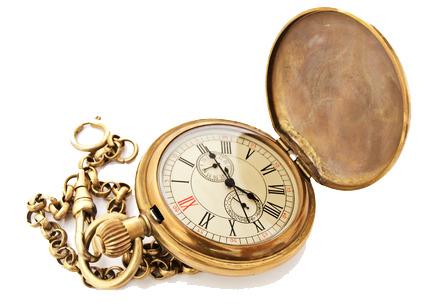
Pocket Watch History
The history of the pocket watch spans over 500 years, evolving from bulky, single-handed neck pendants into highly precise, mass-produced pocket instruments before eventually being superseded by the wristwatch. The timeline below details the core technical advancements, stylistic shifts, and cultural milestones of portable timekeeping.
15th & 16th Century: The Dawn of Portability:
Early timepieces were heavy, rounded, and inaccurate status symbols worn around the neck rather than in a pocket.
1462: The earliest recorded mention of a "pocket clock" appears in correspondence by Italian clockmaker Bartholomew Manfredi.
1510: German locksmith Peter Henlein invents the mainspring in Nuremberg, replacing gravity-dependent weights and allowing for true portability.
1520s – 1550s: The "Nuremberg Egg" style gains traction. These early brass, drum-shaped watches feature only an hour hand and lose several hours of accuracy per day. The introduction of screws allows for slightly flatter shapes.
17th & 18th Century: Precision and the Waistcoat Pocket:
Technical innovations transformed the pocket watch into a genuine precision tool, while fashion dictated its modern placement.
1675: King Charles II of England introduces the waistcoat. To prevent scratching inside the new garment pockets, watches are redesigned to be flat, smooth, and rounded, giving birth to the classic pocket-sized form factor.
1675: Christiaan Huygens invents the balance spring (hairspring), drastically increasing accuracy from hours lost per day to just minutes. This allows for the standard introduction of the minute hand.
1700s: The primitive verge escapement is gradually replaced by more efficient mechanisms like the cylinder escapement (invented by Jean de Hautefeuille) and the lever escapement, vastly reducing internal friction.
19th Century: Mass Production and the Railroad Era:
Industrialization made pocket watches affordable to the general public and essential for modern infrastructure.
1840s – 1850s: Mass production techniques emerge in the United States and Switzerland. Interchangeable parts make watches cheaper to buy and far easier to service.
1891: The Great Kipton Train Wreck in Ohio occurs due to a train engineer's pocket watch stopping for four minutes. This tragedy prompts the establishment of strict "Railroad Chronometer" standards, requiring highly accurate, open-face pocket watches with bold Arabic numerals to prevent future collisions.
20th Century to Present: The Shift to the Wrist:
Modern warfare and a preference for convenience shifted personal timekeeping to the wrist, moving the pocket watch into a niche collectible category.
1914 – 1918 (World War I): Soldiers find it highly impractical to reach into a pocket to read a watch while handling weaponry or riding horses. "Trench watches" (pocket watch movements fitted onto leather wrist straps) solidify the transition toward the modern wristwatch.
1930s – 1950s: The pocket watch transitions from a functional necessity to a formal accessory, often gifted for retirements or worn exclusively with three-piece suits.
Present Day: Pocket watches experience a niche revival among horology collectors, historical reenactors, and steampunk fashion enthusiasts.
15th & 16th Century: The Dawn of Portability:
Early timepieces were heavy, rounded, and inaccurate status symbols worn around the neck rather than in a pocket.
1462: The earliest recorded mention of a "pocket clock" appears in correspondence by Italian clockmaker Bartholomew Manfredi.
1510: German locksmith Peter Henlein invents the mainspring in Nuremberg, replacing gravity-dependent weights and allowing for true portability.
1520s – 1550s: The "Nuremberg Egg" style gains traction. These early brass, drum-shaped watches feature only an hour hand and lose several hours of accuracy per day. The introduction of screws allows for slightly flatter shapes.
17th & 18th Century: Precision and the Waistcoat Pocket:
Technical innovations transformed the pocket watch into a genuine precision tool, while fashion dictated its modern placement.
1675: King Charles II of England introduces the waistcoat. To prevent scratching inside the new garment pockets, watches are redesigned to be flat, smooth, and rounded, giving birth to the classic pocket-sized form factor.
1675: Christiaan Huygens invents the balance spring (hairspring), drastically increasing accuracy from hours lost per day to just minutes. This allows for the standard introduction of the minute hand.
1700s: The primitive verge escapement is gradually replaced by more efficient mechanisms like the cylinder escapement (invented by Jean de Hautefeuille) and the lever escapement, vastly reducing internal friction.
19th Century: Mass Production and the Railroad Era:
Industrialization made pocket watches affordable to the general public and essential for modern infrastructure.
1840s – 1850s: Mass production techniques emerge in the United States and Switzerland. Interchangeable parts make watches cheaper to buy and far easier to service.
1891: The Great Kipton Train Wreck in Ohio occurs due to a train engineer's pocket watch stopping for four minutes. This tragedy prompts the establishment of strict "Railroad Chronometer" standards, requiring highly accurate, open-face pocket watches with bold Arabic numerals to prevent future collisions.
20th Century to Present: The Shift to the Wrist:
Modern warfare and a preference for convenience shifted personal timekeeping to the wrist, moving the pocket watch into a niche collectible category.
1914 – 1918 (World War I): Soldiers find it highly impractical to reach into a pocket to read a watch while handling weaponry or riding horses. "Trench watches" (pocket watch movements fitted onto leather wrist straps) solidify the transition toward the modern wristwatch.
1930s – 1950s: The pocket watch transitions from a functional necessity to a formal accessory, often gifted for retirements or worn exclusively with three-piece suits.
Present Day: Pocket watches experience a niche revival among horology collectors, historical reenactors, and steampunk fashion enthusiasts.